04 — State funding
The state of Oregon's funding commitment
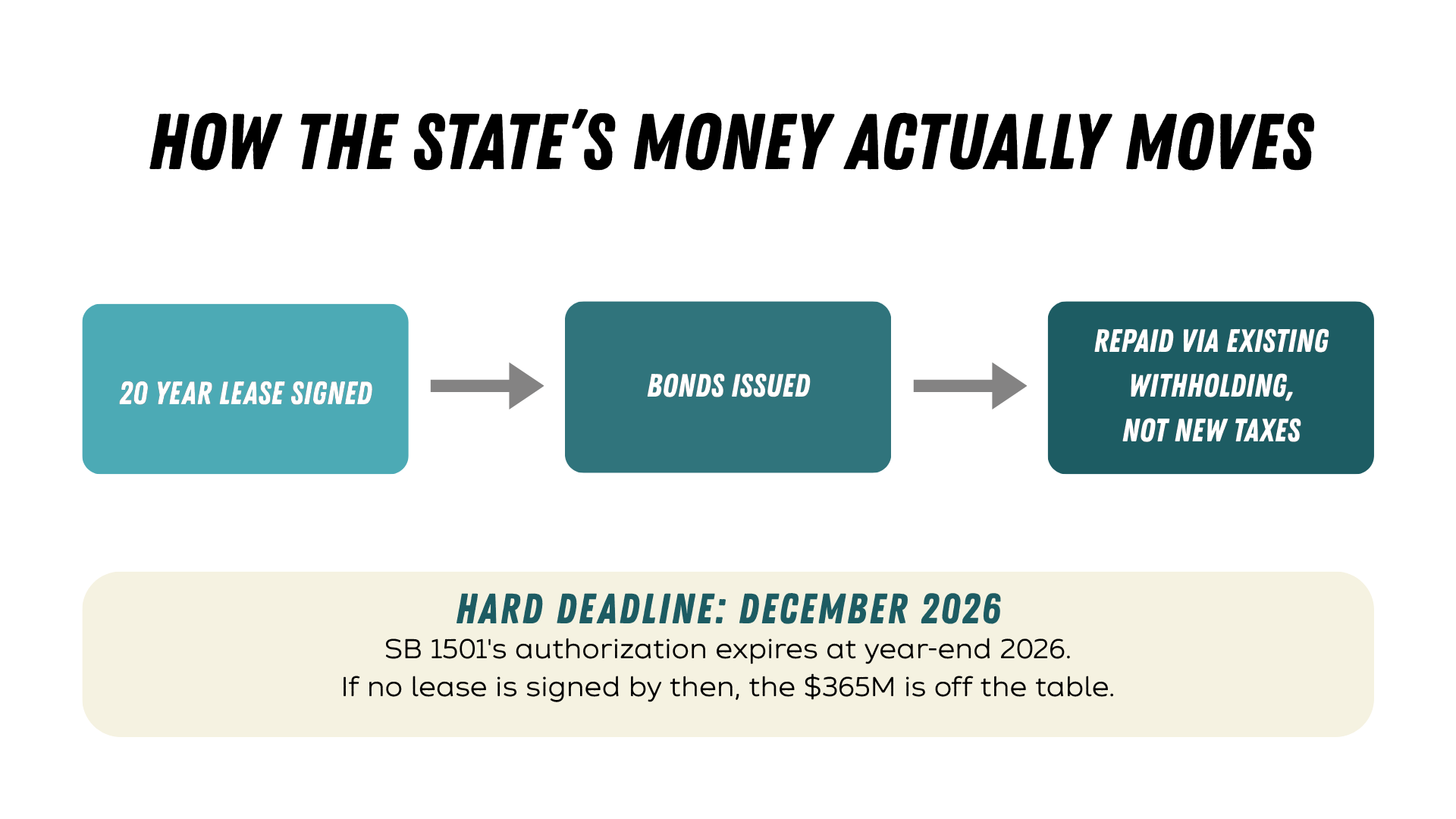
In short: the state has authorized up to $365M in bonds, with no new taxes proposed to repay them. But the money comes with conditions (including a 20-year lease) that need to be completed before the bonds can be sold.
SB 1501 passed with broad bipartisan support and authorizes up to $365M in state bonds for the renovation. Here's exactly how it works, and what has to happen before a dollar moves.
Sources
- SB 1501 lists five prerequisites that must be satisfied before the state can issue bonds: (1) NBA approval of the Blazers' sale to Tom Dundon's ownership group — satisfied, March 2026; (2) creation of a joint State/City authority; (3) an agreement with the arena management entity that includes a 20-year lease; (4) approval of the renovation's scope, schedule, and budget; and (5) binding City and County financial commitments.
Three things worth actually knowing about this money:
On that third point: the state's share gets financed through bonds, repaid using tax revenue that already exists (or will exist) at the Rose Quarter: withholding from wages tied to Rose Quarter employers (including the Blazers), construction wages during the renovation, taxes from performers, and the "jock tax" collected from visiting teams. As Governor Tina Kotek said at the bill's signing: "there's no new taxes related to this." (KGW, Mar 31 2026)
Worth noting: a significant share of that revenue is tied directly to the Blazers and the renovation itself. If the team left, the state would lose the tax revenue tied to the Blazers' payroll and visiting NBA teams. And without a renovation, there wouldn't be construction wages associated with the project. In other words, the state's ability to contribute at this level is closely tied to the team staying and the renovation moving forward.